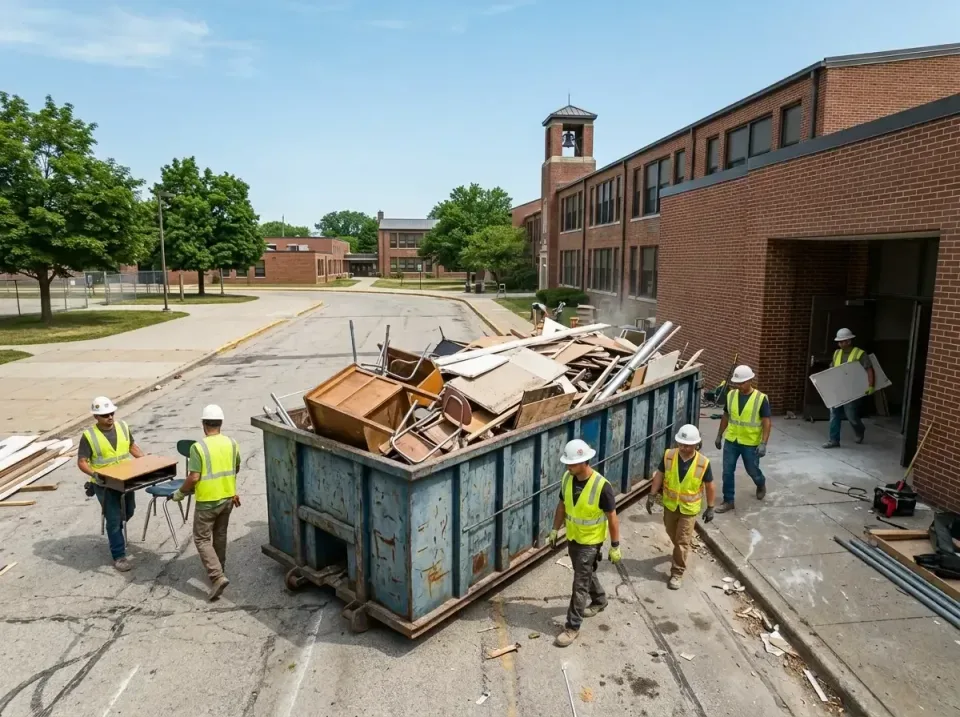
Residential Renovation & Remodel Cleanup
Homeowners and contractors book Sturgeon Bay renovation cleanup for drywall, roofing, lumber, fixtures, and bulky remodeling debris.
DIY junk removal is safer for small, light loads that fit one vehicle and contain no hazardous materials. A construction debris dumpster makes more sense when waste blocks your driveway or requires repeated trips.
In Sturgeon Bay, Wisconsin, renovation waste can quickly block garage access. A 40 yard dumpster rental gives larger projects one controlled disposal point instead of scattered piles.
DIY hauling may suit a few boxes, chairs, or bagged household items. It becomes risky when roofing debris, broken drywall, or bulky furniture requires lifting and repeated loading.
Ask about current 40 yard dumpster rental deals only after estimating volume, material type, and access. Dumpster Rentals Guru can help compare a container with junk removal and bulk disposal across all service areas.
Driveway overflow: Use dumpster right-sizing before debris reaches the street, since a roll-off container needs a firm placement area.
Surface protection: Asphalt or pavers can need driveway protection boards, especially under a loaded container during wet weather.
Material sorting: Source separation keeps concrete, wood, and household junk apart when disposal facilities apply different rules.
Weight screening: Check tare weight and the provider’s tonnage allowance before loading heavy concrete or masonry.
Safety limits: Prohibited materials require separate handling, while the Resource Conservation and Recovery Act and 40 CFR Part 261 guide waste classification.
A 40-yard roll-off container holds 40 cubic yards, but volume does not make dense concrete safe to overload. Keep loads level and ask Dumpster Rentals Guru about material-specific limits before delivery.
DIY works when the load is light, manageable, and legal for ordinary household disposal. One pickup of boxed belongings or a small furniture load may cost less than arranging a temporary waste container.
The decision changes when renovation debris blocks the garage, roofing materials pile up, or cleanup requires several trips. A 40 yard dumpster rental can hold roughly twelve pickup loads, reducing repeated loading, fuel use, and transfer-station stops.
For an estate cleanout dumpster, consider stairs, mattresses, cabinets, and heavy furniture before choosing DIY. A pallet jack may move bulky items more safely than carrying them through a narrow doorway.
Yes, concrete and asphalt can make DIY hauling unsafe even when the pile looks small. Dense material can exceed a pickup’s payload, damage suspension components, or create an unsafe load before the vehicle leaves Sturgeon Bay.
A mixed construction dumpster suits lighter combinations such as lumber, gypsum drywall, and roofing shingles. Concrete-only loads need separate planning because mixed debris and concrete have different weight constraints.
A roll-off delivery truck uses a hydraulic hook-lift system to place the container, but the site still needs stable ground and clear truck clearance. Keep debris below the rim, cover the load, and never place liquids inside.
Do not place asbestos-containing material, electronic waste, or unknown chemicals into a general container. Prohibited-material screening prevents rejected loads and protects workers at the disposal facility.
The United States Environmental Protection Agency connects household and construction waste rules to the Resource Conservation and Recovery Act. OSHA 29 CFR 1926.252 addresses construction debris handling, while asbestos work can involve 40 CFR 61 Subpart M and OSHA 29 CFR 1926.1101.
Separate pressure-treated wood, electronics, and suspected asbestos before booking. Construction waste disposal guidance can help contractors identify disposal questions that need facility confirmation.
Call Dumpster Rentals Guru when driveway debris blocks access, a roof replacement creates a steady waste stream, or DIY hauling would require several vehicle trips. Professional hauling includes delivery and disposal, while DIY leaves you responsible for loading, transport, and facility acceptance.
Measure the approach before requesting a 40 yard roll off dumpster rental. A typical unit is approximately 22 feet long and eight feet wide, so parked cars, branches, wires, and narrow lanes can change placement.
A residential remodeling contractor may need a construction dumpster rental, while a roofing contractor may need a roofing debris dumpster. Request a quote after separating heavy materials and identifying any public-street placement requirement.
A 40-yard construction dumpster fits remodeling waste when wood, drywall, and packaging fill the work area. Professional hauling includes delivery and disposal, unlike DIY trips to a transfer station.
A 40-yard demolition dumpster suits heavier construction and demolition debris. A 40-yard roofing dumpster handles shingles and tear-off material, but weight limits still apply.
A 40-yard yard-waste dumpster fits branches and tree debris when the facility accepts that stream. Confirm whether brush must remain separate before booking.
| Option | Best for | Key detail |
|---|---|---|
| 40-yard construction dumpster | Remodeling | About 40 cubic yards |
| 40-yard demolition dumpster | Structural tear-outs | Heavy debris needs weight planning |
| 40-yard roofing dumpster | Roof replacement | Shingles can add dense weight |
| 40-yard yard-waste dumpster | Tree cleanup | Source separation may apply |
A 40-yard mixed-debris dumpster offers flexibility, while a concrete-only load needs stricter tonnage planning. Roll-off dumpster service information can help explain container choices without replacing a local quote.
Reserve placement: Schedule a temporary dumpster before demolition begins, then identify the loading zone and final pickup date.
Measure access: Confirm driveway width, overhead clearance, and a clear approach for the roll-off delivery truck.
Clear vehicles: Keep parked cars, branches, wires, and pedestrians away from the delivery path.
Protect surfaces: Place plywood under heavy containers when asphalt or pavers could be marked.
Sort debris: Separate heavy materials, liquids, electronics, and other prohibited materials before loading.
Load safely: Keep debris level with container walls, cover the load, and avoid lifting items beyond safe reach.
Schedule haul-away: Arrange debris removal after final loading, and request a local right-of-way permit for street placement when required.
A dumpster rental fee usually reflects container size, material weight, rental period, and access. Dumpster delivery preparation guidance may help crews plan the approach.
A 40-yard residential rental commonly ranges from $500 to $1,200, with region, weight, and rental period affecting the quote. That option may cost less than several disposal trips for a full cleanout.
Roof replacement debris commonly ranges from $450 to $1,000, while commercial renovation may range from $700 to $1,600. Shingles, volume, access, and rental duration change those project totals.
Concrete and asphalt disposal commonly ranges from $600 to $1,500 because material weight and tonnage limits drive disposal charges. An estate cleanout commonly ranges from $500 to $1,200 based on furniture volume, labor, and disposal mix.
A 40-yard commercial cleanout dumpster provides approximately 40 cubic yards, with manufacturer-dependent dimensions near 22 by 8 by 8.5 feet. Final quotes vary by region, weight, rental period, permits, access.
A container swap is cheaper to plan than an emergency pause after the box fills. Keep a clear loading path so dumpster delivery and pickup can happen without moving debris twice. A haul-away should follow final loading, not the first full-looking pile. Ask about an overweight charge before adding dense materials near the container’s center.
The 40-yard cubic-yard capacity is generous for light renovation waste, but concrete, soil, and masonry reach weight limits quickly. Load leveling keeps the top clear and reduces rejection risk.
Common mistake: Customers estimate furniture by floor space but forget cabinets, mattresses, and demolition debris can require separate handling.
Dumpster Rentals Guru can review material type, access, and likely container swaps before you commit to a large dumpster rental.
DIY junk removal suits a small, light load with safe lifting and a legal disposal route. Professional hauling fits overflowing driveways, blocked garages, roofing materials, and bulky furniture.
In Sturgeon Bay, plan for approximately 60 feet of straight truck approach before choosing driveway placement. Rental periods commonly run 7–14 days, giving remodeling crews time to finish loading.
Dumpster Rentals Guru can help compare junk removal and bulk disposal with a 40-yard container. Tree and yard debris removal may need a separate waste stream from household junk.
Measure access, separate heavy materials, and request a quote before demolition begins. Dumpster rental planning resources can support broader disposal research, while Dumpster Rentals Guru provides the practical next step for your project.

Yes, DIY is safer only when the load is small, light, and removable without entering traffic or lifting beyond safe reach. When debris overflows the driveway, a roll-off container provides controlled cubic-yard capacity, while driveway protection and truck clearance must be planned.
Yes, a 40-yard roofing dumpster can handle many roof replacement projects when shingles remain below the rim and the tonnage allowance is confirmed first. Roofing materials can become heavy quickly, so ask Dumpster Rentals Guru about load leveling and any overweight charge.
Prohibited materials can include asbestos-containing material, liquids, chemicals, and some electronic waste, so do not mix them with furniture or household junk. The United States Environmental Protection Agency, 40 CFR Part 261, and the Universal Waste Rule provide disposal classifications that facilities may apply.
A 40-yard residential rental commonly costs $500–$1,200, with region, weight, and rental period affecting the final quote. The container provides 40 cubic yards, but concrete, asphalt, and other dense materials can increase disposal charges through tonnage limits.
You may need a local right-of-way permit when a dumpster occupies a public street rather than private property. Commercial demolition contractors should also account for NPDES construction stormwater requirements, OSHA asbestos work practices, and state solid-waste rules before loading regulated materials.
Browse all nationwide service options and choose the right fit for your project.
Homeowners and contractors book Sturgeon Bay renovation cleanup for drywall, roofing, lumber, fixtures, and bulky remodeling debris.
Commercial demolition dumpsters help contractors and property managers clear concrete, drywall, roofing, and mixed construction debris in Sturgeon Bay.
Homeowners, roofing contractors, and property managers book Sturgeon Bay roof debris removal for shingles, lumber, and replacement waste.
Apartment property managers book Sturgeon Bay cleanout dumpsters for furniture, renovation debris, and high-volume unit turnovers.
Homeowners, executors, and property managers book Sturgeon Bay estate cleanout dumpsters for furniture, household junk, and liquidation debris.
Property managers and contractors book foreclosure cleanouts for furniture, renovation debris, appliances, and household waste in Sturgeon Bay.
Homeowners, landscapers, and property managers use Sturgeon Bay dumpsters for brush, limbs, stumps, and bulky yard debris.
Homeowners, contractors, and property managers book Sturgeon Bay junk removal for furniture, appliances, and bulk debris.
Homeowners, contractors, and property managers book storm debris dumpsters for trees, roofing, siding, and bulky damage waste in Sturgeon Bay.
Contractors, property managers, and business owners book Sturgeon Bay dumpsters for office renovation waste and commercial cleanouts.
Retailers, restaurant owners, and property managers book large-container cleanouts for fixtures, furnishings, equipment, and renovation debris in Sturgeon Bay.
Contractors, facility managers, and property owners book warehouse cleanout dumpsters for industrial debris in Sturgeon Bay.
Homeowners, contractors, and property managers book Sturgeon Bay dumpster service for concrete, asphalt, and paving debris.
Homeowners, contractors, and property managers book basement, crawlspace, and foundation debris removal in Sturgeon Bay.
Homeowners, contractors, and property managers book Sturgeon Bay dumpsters for attic insulation, ceiling materials, and renovation debris.
Homeowners, contractors, and property managers use our Sturgeon Bay service for lumber, pallets, branches, and renovation wood waste.
Homeowners and property managers use our Sturgeon Bay service to remove garage junk, furniture, renovation debris, and bulky items.
Homeowners, contractors, and property managers book Sturgeon Bay metal scrap collection for sorted recyclable materials and cleanup debris.
Homeowners, contractors, and property managers use Sturgeon Bay dumpsters for mixed renovation, demolition, roofing, and cleanout debris.
Homeowners, property managers, and contractors book Sturgeon Bay dumpsters for hoarding debris, bulky items, and property cleanouts.
Home cleanouts and moves in Sturgeon Bay need driveway-friendly placement and the right container size — moving & residential debris removal without surprise reload fees.
Manufacturing facility managers book Sturgeon Bay dumpsters for plant shutdowns, equipment removal, demolition debris, and industrial cleanouts.
Contractors and school managers use us for classroom renovations, roofing debris, bulky furniture, and institutional cleanouts in Sturgeon Bay.
40-yard dumpsters for Sturgeon Bay contractors, builders, roofers, and property managers handling high-volume job-site debris.
Homeowners, contractors, and property managers book Sturgeon Bay emergency debris removal for urgent roofing, storm, and cleanup waste.